
Slik driver du et nettforum for veteraner
When we first launched our own online forum for veterans, we expected the technology to be the hard part. It wasn’t. The real challenge — and the real reward — was building a space where kameratstøtte could happen naturally, day after day, across time zones and decades of service. A well-run forum does not replace professional mental health care, but it fills a gap that formal services often cannot: the 2am conversation with someone who has been there. In this article, we share what our team has learned about planning, moderating and sustaining a veteran community, with lessons that apply whether you are based in the UK or supporting Norwegian veterans who served in internasjonale operasjoner.
Hvorfor et nettforum for veteraner fortsatt er viktig
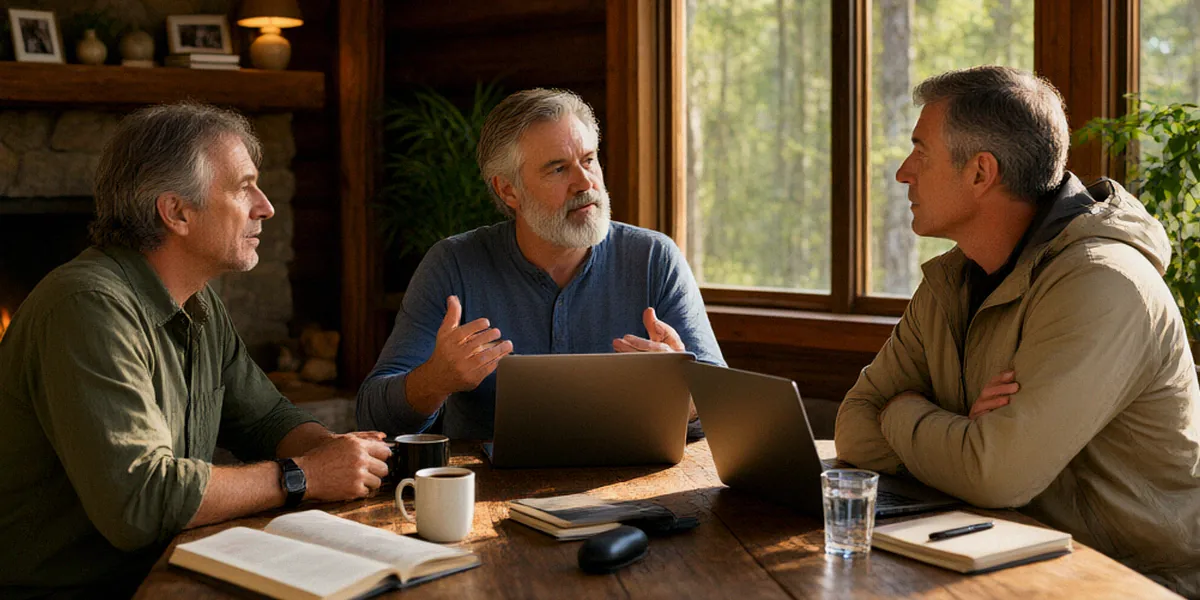
Formal support structures matter, but they operate on appointment schedules. A forum operates on the veteran’s schedule. In the UK, the UK Armed Forces Covenant sets out a national commitment that those who serve or have served, and their families, should be treated fairly — yet many veterans still fall through the cracks between NHS services, charities and local authorities. Organisations such as Combat Stress and Help for Heroes do extraordinary work, but their capacity is finite and their waiting lists are real. A forum complements them by offering immediate, low-threshold contact with peers who understand military culture without explanation.
Kameratstøtte i en digital hverdag
Kameratstøtte is not a clinical intervention. It is the everyday practice of checking in, remembering a shared exercise or deployment, and noticing when someone goes quiet. In a digital setting, this happens through small signals: a member posting in an introduction thread after months of silence, a moderator sending a private message, a thread about internasjonale operasjoner that suddenly gets twenty replies from people who served in the same rotation. We have found that the most valuable threads are rarely the ones about PTSD in the abstract — they are the ones about specific, shared experience.
Tilgjengelighet for veteraner i distriktene
Many veterans live far from the nearest military charity office or NHS specialist. For someone in rural Norfolk, the Scottish Highlands or a small Norwegian municipality, a forum may be the only veteran-specific contact available on a Tuesday evening. This is where a digital community earns its place: no travel, no referral, no waiting list. It also suits veterans who are not ready to identify themselves publicly as someone struggling — they can read first, post later, and stay anonymous for as long as they need.
Planlegging og oppstart av forumet
Before you write a single moderation guideline, decide what the forum is for. A peer support community has different requirements from a campaign platform or a benefits advice service. Write this down in one paragraph and keep returning to it — it will settle a hundred small decisions later.
Valg av plattform og teknisk oppsett
For most veteran communities, two platforms cover the realistic options:
- Discourse — modern, mobile-friendly, strong moderation tools, good for communities that expect growth and want built-in trust levels.
- phpBB — long-established, inexpensive to host, familiar to older users, but requires more manual configuration and plugin maintenance.
Whatever you choose, register the domain early, use reputable hosting with EU or UK data centres, and enable two-factor authentication for all administrator accounts. Test the registration flow on a phone — a surprising share of your members will only ever use mobile.
Personvern og sikkerhet for sensitive samtaler
Veterans discussing PTSD, trauma or benefits disputes are sharing special category data under UK GDPR. From day one, you need a lawful basis for processing, a clear privacy notice written in plain language, and a retention policy for private messages. Do not use third-party analytics that profile users across sites. Consider allowing pseudonymous accounts, and make it explicit that anything posted in public threads may be visible to search engines — sensitive disclosures belong in members-only areas. If you cannot explain your data practices in one page, simplify them until you can.
Innhold og kultur: å skape trygg kameratstøtte
Culture is set in the first three months and enforced forever after. The tone you accept in week one becomes the norm in year three.
Retningslinjer for PTSD og sensitive temaer
We recommend a short, specific policy rather than a long legalistic one. It should cover:
- Trigger warnings in thread titles for detailed descriptions of traumatic events.
- No graphic operational detail that could identify individuals or ongoing operations.
- No medical or legal advice presented as professional advice — peer experience only.
- Zero tolerance for stigma, «toughen up» responses or dismissing anyone’s service.
Å bygge tillit blant nye medlemmer
New members arrive cautiously. Give them a low-stakes way in: an introduction thread, a «what did you serve on» poll, a welcome message from a moderator within 24 hours. Encourage discussion of internasjonale operasjoner through specific, factual threads — a particular deployment, a particular role — rather than broad «tell us your trauma» prompts. Trust grows when people see that the community is steady, not dramatic.
Moderering, konflikt og psykisk helse
Moderators are the backbone of the forum, and they need training, not just goodwill. We run a short onboarding for every moderator covering de-escalation, confidentiality, and the limits of their role. Moderators are not counsellors, and they should never be asked to be.
Rutiner for krisehåndtering
Have a written escalation path for when a member posts something suggesting immediate risk. In practice this means: a moderator responds calmly and privately, encourages contact with emergency services if there is immediate danger, and logs the incident. In the UK, signpost to Veterans’ Gateway (0808 802 1212) and NHS Op COURAGE, which provides specialist mental health care for veterans in England. Samaritans (116 123) is available 24/7 across the UK. Keep these numbers pinned in a visible thread and in your moderation handbook.
Viderehenvisning til profesjonell hjelp
Signposting works best when it is specific and warm. «You might find it helpful to contact Op COURAGE» is weaker than «Op COURAGE has a self-referral line; here is what happens when you call.» Where possible, maintain relationships with local veteran charities so you can point to a named contact rather than a generic web form.
Vekst, engasjement og veteranrettigheter
A forum that only discusses trauma will eventually exhaust its members. Balance is essential: practical threads on veteranrettigheter, pensions, compensation schemes and civilian employment keep the community useful as well as supportive.
Kampanjer og temauker
Run themed weeks — for example, a week on war pension appeals, or a series of Q&As with specialists on veterans’ rights. Invite guest contributors from established organisations; the Royal British Legion and similar bodies can often provide speakers or written guidance. These events bring lapsed members back and give newer members a reason to post.
Måling av aktivitet og medlemstilfredshet
Track a small number of meaningful metrics: active posters per month, new member retention at 90 days, response time to first post, and moderator workload. Run an annual anonymous survey asking one blunt question: «Do you feel safer here than in other online spaces?» The answer tells you more than any dashboard.
Økonomi, drift og bærekraft
Forums cost money and energy. Pretending otherwise leads to sudden closures that betray members’ trust.
Donasjoner og støtte fra veldedige organisasjoner
Small, transparent donation models work well: a visible running-cost figure, an annual appeal, and no paywalled access to support threads. Some communities secure modest grants from military charities or receive in-kind support such as free hosting. If you accept funding, disclose it publicly and keep editorial independence from any funder.
Å unngå utbrenthet blant frivillige
Moderator burnout is the most common cause of forum decline. Rotate duties, cap weekly moderation hours, provide peer debriefs after difficult incidents, and recruit before you need to. If a moderator wants to step back, thank them and make the exit easy — they may return.
Ofte stilte spørsmål
Trenger jeg tillatelse for å starte et veteranforum?
No. You do not need official approval to run a peer community. However, if you present yourself as affiliated with a charity or public body, you must have their written agreement. Be clear in your «about» page that you are an independent peer forum, not a clinical or statutory service.
Hvordan håndterer vi medlemmer som deler sensitive operasjonsdetaljer?
Remove or edit the post, contact the member privately to explain why, and remind the community of the guidelines. Persistent sharing of operationally sensitive material should lead to suspension. This protects both the member and the community.
Er det greit å ha en egen seksjon for PTSD?
Yes, provided it is members-only, clearly labelled with content warnings, and moderated by people who understand trauma-informed communication. Some communities prefer to integrate PTSD discussion into general threads to reduce stigma — both approaches can work if the culture is right.
Hvilke britiske ressurser bør vi lenke til?
At minimum: Veterans’ Gateway, NHS Op COURAGE, Combat Stress, Help for Heroes, the Royal British Legion and Samaritans. Check the links quarterly, as contact details and service names change.
Hvor mye tid krever et forum i drift?
Expect at least five to ten hours a week for a small, active community, shared across two or three moderators. Growth increases moderation load faster than it increases revenue, so plan capacity before you promote the forum widely.
A veteran forum is not built by choosing the right software. It is built by consistent moderation, honest communication and genuine kameratstøtte — the same qualities that held units together in service. Get those right, and the technology becomes almost invisible. Get them wrong, and no platform will save you.


Post Comment